Thursday, December 22, 2011

Fixing the "Pains" of Our Ocean World

Our third day took us to downtown Honolulu to learn about the work of engineers at Oceanit, a locally-built business that creates innovative solutions to our "pains."  Neenz Faleafine, Oceanit's Community Developer, explained how Oceanit works and took us around the office to see just a few of the inventions they created and now market through spin-off companies.


One of the inventions is a "smart bed" that can read and monitor the body's temperature, breathing, etc. through a coverlet, which allows people from afar to see how a patient, or kupuna, is doing.


 Neenz also talked about a "smart concrete" that can figure out how heavy a vehicle is driving on the road as well as the condition of roads, among other things. These inventions are created by teams, inspired by ideas that are sometimes drawn on walls in the office. A special paint allows the drawings to be easily erased.


One of the inventions that was really neat was the 3-D printer.


After the office tour, we listened to Dr. Bob Burke talk about his job at Oceanit. He is a biologist that specializes in fishes. He spends a lot of time on field studies with other specialists to learn about the environment they are trying to help.


Dr. Burke helped us understand what it takes to be a scientist and how to prepare in school to go on that path. You gotta like math and science!


After Oceanit, we walked a few blocks to the offices of The Nature Conservancy, a non-profit international conservation organization that has been in Hawai`i for 30 years. There we met members of the Marine program, including Sean Marrs, Kanekoa Kukea-Shultz, Manuel Mejia, Duane Minton, and Brad Wong.


Each of the staff members talked about their jobs, how they got started, who inspired or mentored them, and most importantly, why they do what they do.

 
Sean and Koa also prepared us for our visits next week to the Hawai'i Institute of Marine Biology (where the Super Sucker, invented by staff of The Nature Conservancy, is stationed) and Mahuahua 'Ai o Hoi in He'eia., where Koa works on a kalo/coastal restoration project. He said to be prepared to get really dirty! Woohoo!


Wednesday, December 21, 2011

Coastal restoration and water quality monitoring at Kalaeloa

On the second day of the session, we traveled to Kalaeloa, which is very close to Kapolei High School. There, we met with Lorena Wada (Aunty Tap) of the U.S. Fish and Wildlife Service.  She is a wildlife biologist who does a lot of different type of work to save rare and endangered species.


This area is a wildlife refuge and from first glance, is not much to look at, but upon closer inspection, you can see why this is a special area. Once covered with tall, invasive trees, this area now is being restored with native Hawaiian coastal plants. And the anchialine ponds are now visible, which gives us a glimpse into the mysterious world underground.


We took water samples from the brackish water ponds. Here's Austin of Kapolei High using a long pole with a dish on it to collect water. That's innovation!


We looked at different tests such as pH, dissolved oxygen, phosphate, nitrate, and turbidity. The water quality appeared to be pretty good.


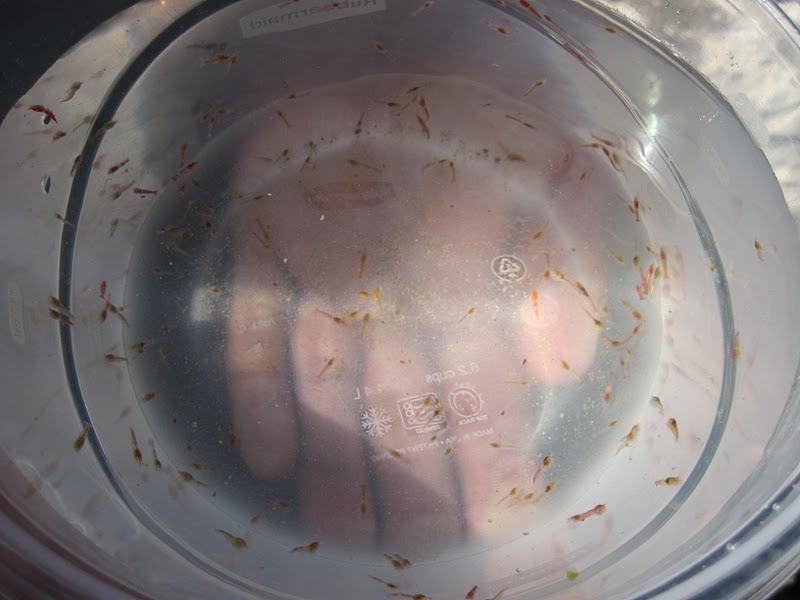
We also got to see the plentiful 'opae 'ula (red shrimp) that live in the anchialine ponds. They are unique to Hawai`i!

The environment at Kalaeloa is windy, sunny, and salty. We learned how the native plants adapt to that kind of environment by growing low to the ground and having silvery hairs to reflect the sunlight.


Rusty, also of Kapolei High, is showing us the hinahinakukahakai, a favored plant for lei making.


Isaiah, a STEP intern with the US Fish and Wildlife Service, helped us learn about fossilized bones of flightless birds that once lived in this area a long time ago. It was an "Indiana Jones" moment!


Mahalo to Aunty Tap and team for teaching us about marine-related jobs on land with the U.S. Fish and Wilidlife Service!


Tuesday, December 20, 2011

Our Winter 2011 Session Begins!

It's Winter Break and the 23 students in our program are certainly not sleeping in!  We began the program with introductions, an overview of the program, and expectations.  All students were eager to learn about ocean-related environmental careers, which is the focus of this HGCI session.


We then boarded the bus to go to Pearl Harbor, Ford Island to be specific. It took a while to find, but we finally saw the ship Hi'ialakai, which is part of the NOAA fleet. NOAA stands for the National Oceanic and Atmospheric Administration.  We met officers Elliott and Vegar of H`iialakai who are in NOAA Corps, one of the seven uniformed branches of our federal government.


They took us all aboard the ship to get a feel for what their work and living conditions while at sea are like. Below is a decompression chamber that is used to save lives of crew members (or others at sea) who ascend too quickly from deep dives.


NOAA Corps addresses a number of issues including marine debris and oil spills.


We enjoyed hearing from Jasmine, a marine biologist. She does a lot of work in the Papahanaumokuakea Marine National Monument (Northwestern Hawaiian Islands). It's a fascinating world way out there where few humans but miillions of animals live, mostly underwater.


Marine debris is a HUGE problem at the Monument and all over the world. It was alarming to hear how many million tons of debris are collected every year, which is just a drop in the bucket, The debris coming from Japan due to the tsunami will challenge all of us in ways we've never experienced before.


Jasmine had us try writing on the waterproof paper. Very neat!


As we left the Hi`ialakai, we took our first (of many) group picture on the bridge to the boat.


We ended our day watching two films by NOAA that gave us more information on the NOAA Corps and the many different jobs and benefits that are available, as well as Hawaiian cultural connections to the Monument. What a full day!

Saturday, October 8, 2011

Day 6 - Prep for College and Beyond!!

For our last day of the Fall 2011 Hawai'i Green Collar Institute we met at Leeward Community with Auli'i Silva, coordinator extraordinaire of Hālau ‘Ike o Pu‘uloa. We were joined by past HGCI participants, both educators and participants learning about where we take our new knowledge about green collar jobs, be it to education or the workforce. First we were joined by  Jeffrey Matsu, Lead Researcher, Hawaii Green Jobs Initiative, State DLIR who presented what the state of Hawai'i's research on green jobs and the services they have to support green job-seekers.

College Planning

Next we had presentations from Sheryl Higa: College Recruiter on “How to Choose a College That’s Just Right For You.” Nicole Keim-Fortuno: Counselor, Developmental English “Seven Things I Wish I Knew When I Started College.”

Wow, there is A LOT to think about; what kind of college am I looking for, what do I need to do to apply to college, what colleges and employers are looking for.


Career Planning

Aulii Silva, Coordinator at Hālau ‘Ike o Pu‘uloa, spoke with us about how to jump starting your “Green Career” during college. Finding a mentor, be it in school, through a program, any one of the HGCI staff, is a crucial component to success. I was surprised to find out how much opportunity there is for grants and funding for school. Layering funding from different entities, federal, private, work study, etc. College IS possible!!


After a full morning, we feasted on a delicious lunch prepared by Mark Ka'aha'aina. We were lucky to have Leeward CC Students in Green Degree Programs candidly speak with us about their experiences in school from what the favorite and least favorite classes (I liked that Kalani's were both physics), how they afford school, and more. We wish we had even more time to talk with them.  

Mahalo to all the speakers today, who helped us learn more about "the next steps," speakers all week who introduced us to new green collar job opportunities, and the wonderful students who spent their fall intersession with us. We look forward to seeing everyone in upcoming events and HGCI reunions!!

Friday, October 7, 2011

Day 5 - Wrapping up in the classroom

We returned back to the classroom after our tour at Oceanic and feasted on a Hawaiian lunch prepared by Mark Ka'aha'aina. It was so 'ono!  (No pictures again, shucks!)


Then we heard from Mr. Howard Killian of the U.S. Army and the Ordnance Reef Hawaii project spoke to us about the disposed munitions from World War II that are in the ocean waters all over the Hawaiian Islands, including along the Wai'anae Coast. While they aren't as dangerous as unexploded ordnance, they still should be handled with care, especially because they are more than 60 years old and deteriorating in the water. He showed us some cool videos showing robots picking up ordnance from hundreds of feet deep. Several marine scientists are working on this project along with the robot, who makes their job safer.


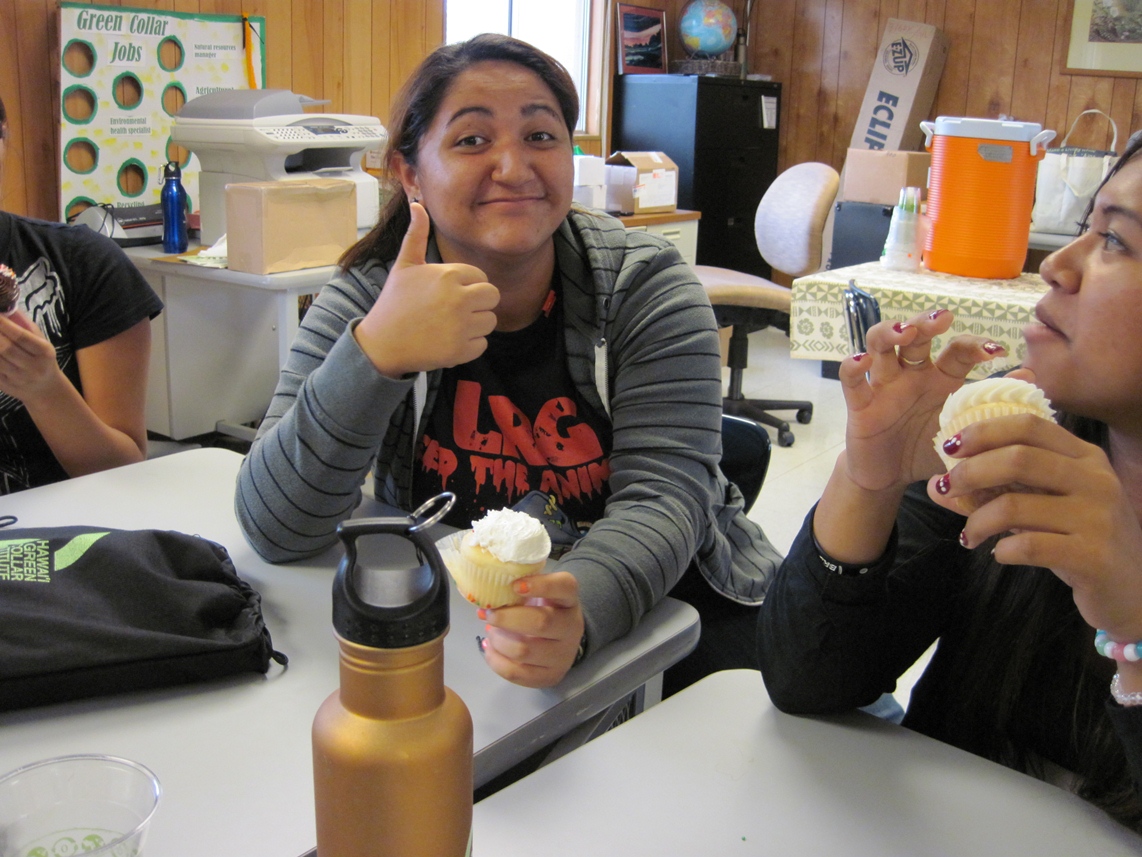
Then we all got to fill out a post-survey (yippee!) as well as complete our journal assignments. The reward was having cupcakes and singing "happy birthday" to several of our classmates. Hau'oli la hanau!


Day 5 - It's all about energy!

Today we heard from a variety of interesting speakers on the topic of alternative energy and energy conservation.  Our first speaker was Mr. Kalani Ruiz, who was in a previous HGCI program. He works full-time for Nissan and is also a student at Leeward Community College studying mechanical engineering. His presentation on electric cars and his summer project was really interesting. So interesting that we didn't think of getting our cameras out to take pictures!

Next we heard from Tamba and Ivy from Blue Planet Foundation. They gave a high energy presentation on why we need to reduce our dependence on fossil fuels and get with the program on alternative energy!  They also pointed out easy ways we can help to conserve energy, particularly by switching out incandescent bulbs with compact fluorescent or LED bulbs.


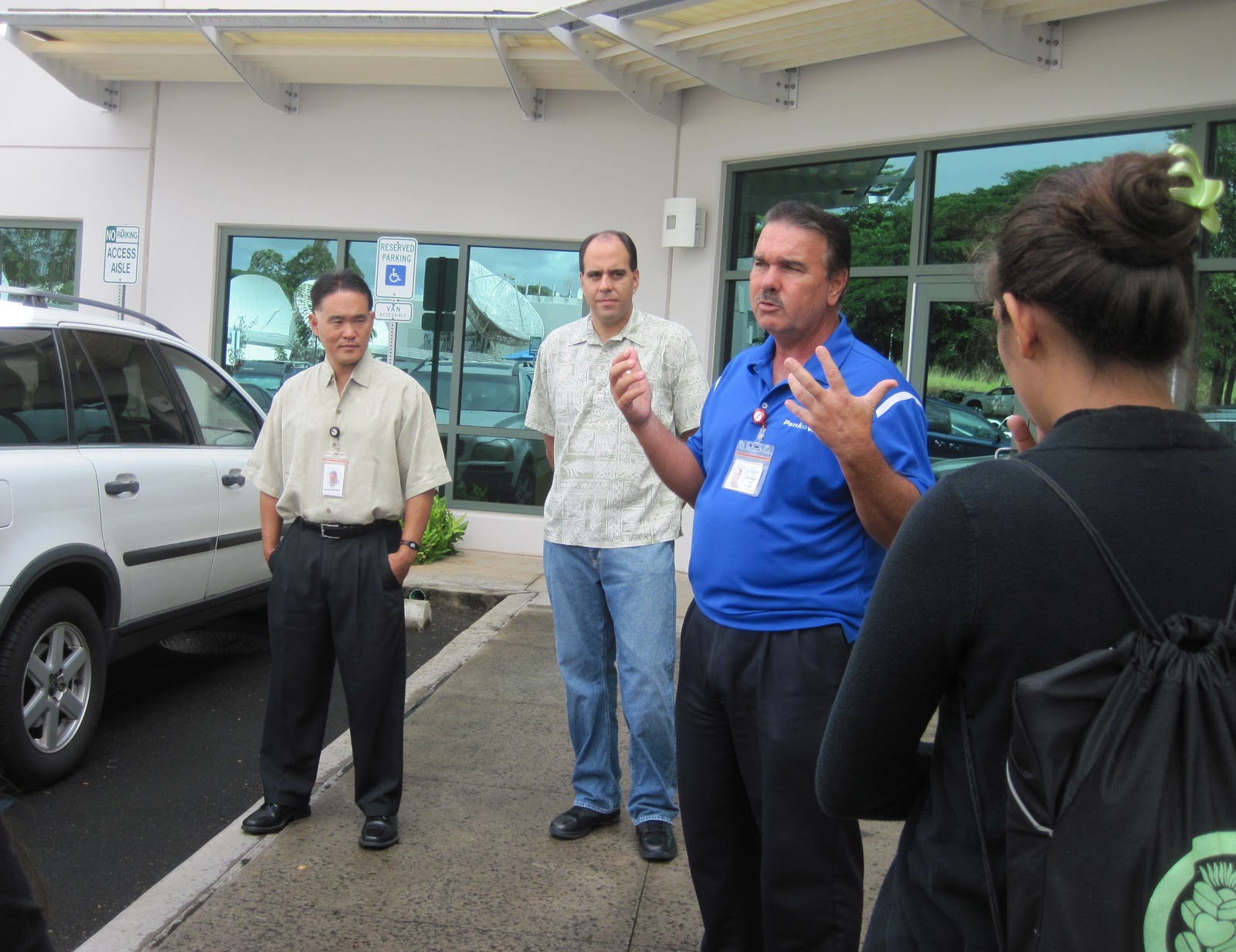
After that we hopped on a bus to visit Oceanic Cable Time Warner in Mililani. We were pretty much blown away with all they are doing to be green by having a LEED Gold certified building with a huge PV parking lot. Brian Kealoha of Chevron Energy Solutions helped arrange this tour by the top executives of Oceanic.


They talked to us about ways they capture storm water and let it filter underground in a system that cleans out the toxins before the water is released downhill, eventually ending up in the ocean.


We saw the parking lot with shade provided by PV panels. Not only do the panels generate energy, they also extend the life of the asphalt as well as keep cars cool.


Inside the building, we learned that the carpeting is "green," too. It's put together in removable square so that if any place needs to be replaced, you just need to take out the square and not the entire carpet. That would save a lot of resources and reduce waste going into the landfill or H-Power.


Even the chairs they give to employees are good for the environment and people. They are ergonomic and made of recycled plastic. They sure were comfortable!


Certain types of plants that clean the air of harmful chemicals are strategically placed throughout the building.


Also throughout the building are little signs that explain what's "green" about a particular feature of the building. This is an educational tool to help the employees and visitors understand why things are a certain way and how they are helping the environment.


Another educational tool is the monitor at the entrance of the building that shows, in real time, the energy that is being produced by the PV panels, how much energy is being consumed, and other information that helps people understand how the building is helping them become a green business.


Today was the first time most of us had been in a LEED Gold building and this experience made us want to see what more we can do at school and in our homes to become more sustainable.

Thursday, October 6, 2011

Day 4 - Going up mauka to Wai'anae Kai

Today was a day to get our hands real dirty and help to save our native forests. We also learned a lot about working hard together to get big jobs done -- teamwork!  Here we are looking nice and clean before we got started.


Scott Lynch of the Wai'anae Mountains Watershed Partnership took us on a fun adventure to Wai'anae Kai Forest Reserve. Our task was to help keep the fuel load down (e.g. clearing dry brush and pruning trees) and keep a firebreak clear. Fires, which are not generally a natural occurrence in Hawai`i, often start from the lowlands (by people) and move on up the mountain, taking out native species along the way. Maintaining a fire break helps to protect the upland forests.

With some light hand tools, we were off to work!  It was hot and sticky but that didn't stop  us from getting a lot of work done.


Another challenge they face here is having cattle break through fences and run into the forests. We saw a calf being urged back into the neighboring ranch by our new friend, Mr. Fuller. That was quite a surprise!


As it was pretty hot and we were working hard, we had to take breaks now and then. We really got to appreciate fresh water, which is what the forest watershed protects. It was nice to see folks sharing water.


How do we look in our "after" shots?  Pretty awesome!  Thanks, Scott, for the rewarding day.